what to do for a ruptured vein on the back of a hand
Overview
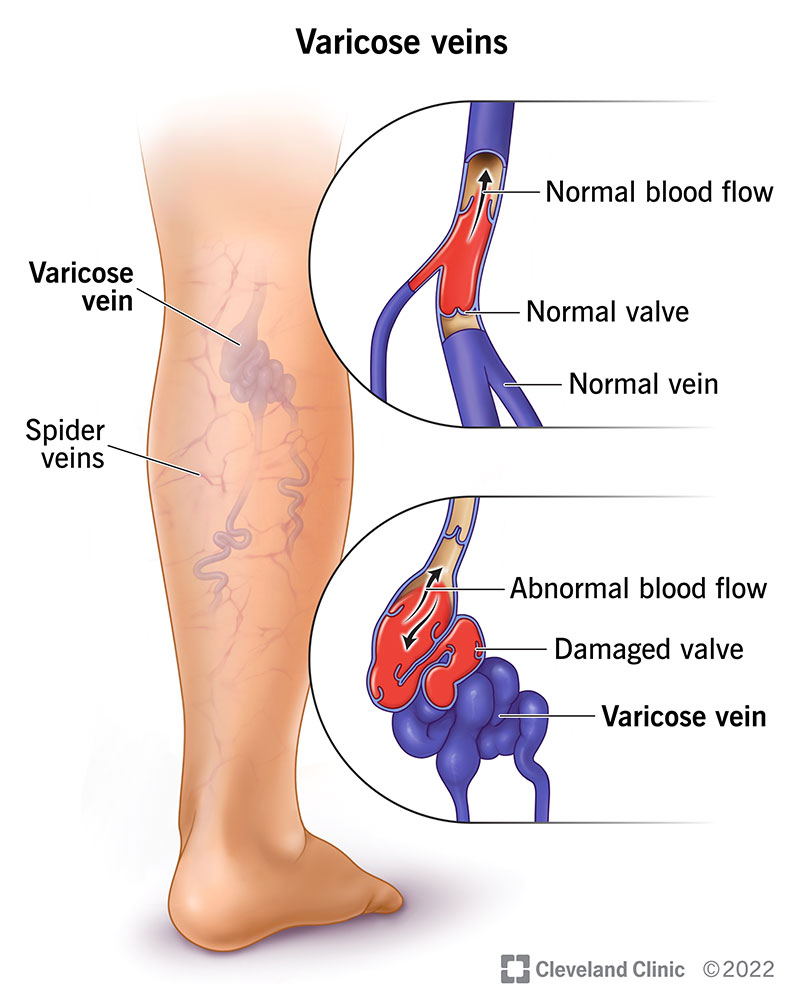
What are varicose veins?
Varicose veins are swollen, twisted claret vessels that burl just under your skin's surface. These blue or royal bulges usually appear in your legs, feet and ankles. They tin can exist painful or itchy. Spider veins, which may environs varicose veins, are smaller ruddy or royal lines that appear close to your peel's surface.
Although they can be unsightly and uncomfortable, varicose veins aren't dangerous for nigh people. In some cases, severe varicose veins can lead to serious wellness problems, such as claret clots. Yous tin relieve well-nigh varicose vein symptoms at home or your healthcare provider can treat them with injections, laser therapy or surgery.
What is the difference between varicose veins and spider veins?
Varicose veins and spider veins are both types of venous illness, but they expect different. Spider veins are smaller and thinner than varicose veins. They look like red or blue spider webs or branches of a tree, and they are close to the skin's surface.
Spider veins aren't normally painful. They can appear anywhere on your body, virtually often behind your knee joint, on your feet or on your face up. Varicose veins normally appear on your feet and legs.
Who is likely to get varicose veins?
Anyone tin develop varicose veins. Certain factors increase your chances of developing varicose veins, including:
- Age: Because of the aging process, vein walls and valves don't work every bit well as they one time did. Veins lose elasticity and stiffen.
- Gender: Female hormones can allow the walls of the veins to stretch. People who are pregnant, taking the nascency control pill or going through menopause accept a college risk of varicose veins considering of changes in hormone levels.
- Family history: This condition tin can be inherited (runs in families).
- Lifestyle: Continuing or sitting for long periods decreases apportionment. Wearing restrictive habiliment, such equally girdles or pants with tight waistbands tin decrease blood flow.
- Overall health: Sure health conditions, such as severe constipation or certain tumors, increase pressure in the veins.
- Tobacco utilise: People who use tobacco products are more than likely to develop varicose veins.
- Weight: Excess weight puts force per unit area on blood vessels.
How common are varicose veins?
Varicose veins are very mutual. Around 1/iii of all adults accept varicose veins. They are more than mutual in people assigned female at birth than in people assigned male at birth.
Symptoms and Causes
What are the symptoms of varicose veins?
The virtually recognizable sign of varicose veins is a gnarled, blue or purple vein just under your pare's surface. Symptoms include:
- Bulging veins: Twisted, swollen, rope-like veins are often blueish or purple. They appear just below the surface of the skin on your legs, ankles and anxiety. They tin can develop in clusters. Tiny red or blue lines (spider veins) may announced nearby.
- Heavy legs: Muscles in your legs may feel tired, heavy or sluggish, especially after physical action.
- Itching: The area effectually varicose veins may crawling.
- Pain: Legs may be painful, achy or sore, especially behind your knees. Y'all might have musculus cramps.
- Swelling: Your legs, ankles and feet can swell and throb.
- Pare discolorations and ulcers: If left untreated, varicose veins tin cause brown discolorations on your skin. Astringent varicose veins can cause venous ulcers (sores) on your skin.
Where do varicose veins commonly appear?
Well-nigh often, varicose veins develop on the lower one-half of your body, usually on your calves, ankles and feet. They can also develop in the pelvic area (pelvic congestion syndrome), specially in people who accept had children. Varicose veins in the testicles (varicocele) can lead to infertility.
What causes varicose veins?
Varicose veins occur when the walls of your veins weaken. As blood pressure in your vein increases, the weakened walls let your vein to get bigger. As your vein stretches, the valves that go on blood moving in one direction in your vein can't work like they should. Sluggish blood backs upwards or pools in your vein, causing your vein to cracking, burl and twist.
Vein walls and valves can become weak for several reasons, including:
- Hormones.
- The aging process.
- Excess weight.
- Restrictive wearable.
- Pressure inside the vein from standing for long periods.
Diagnosis and Tests
How are varicose veins diagnosed?
Varicose veins are shut to the surface of your skin and easy to meet. Healthcare providers can diagnose the condition during a concrete examination. They'll feel your veins and examine them while yous're sitting and continuing.
To see detailed images of your veins and check for complications, your provider may recommend an ultrasound. This safe, painless test uses sound waves to produce pictures of tissues inside your torso. Ultrasounds can show blood clots and how your valves are working.
Management and Treatment
What is the handling for varicose veins?
Although at that place isn't a cure for varicose veins, these treatments tin can reduce their appearance and relieve discomfort:
- Elevation: To increase claret flow and decrease pressure in your veins, y'all should elevate your legs above your waist several times throughout the day.
- Elastic stockings: Supportive stockings or socks compress your veins and reduce discomfort. The pinch stops your veins from stretching and helps blood flow.
- Injection therapy (sclerotherapy): During sclerotherapy, a healthcare provider injects a solution into your vein. The solution causes the vein walls to stick together. Eventually, your vein turns into scar tissue and fades away.
- Laser therapy: In a minimally invasive procedure called endovenous thermal ablation, healthcare providers utilize a catheter (a long, thin tube) and laser to close off a damaged vein.
- Vein surgery: During these procedures, also called ligation and stripping, the surgeon ties off your affected vein (ligation) to stop blood from pooling. The surgeon may remove (strip) the vein to prevent varicose veins from reappearing.
Complications/side effects of the treatment
Half of the people who accept surgical stripping become varicose veins again within five years, and varicose veins can happen again after endovenous ablation likewise.
Potential side effects of these treatments include:
- Scarring.
- Skin burns.
- Infection.
- Injury to a nervus.
- Deep vein thrombosis (a blood clot in a vein deep within your body).
Sclerotherapy can cause side furnishings that include:
- Redness or bruising for a few days where a needle went into your peel.
- Brown areas (for several months) on skin where the needle touched.
- Lumps or hardness for a few months.
With sclerotherapy, new varicose veins tin happen and need treatment.
Prevention
How can I prevent varicose veins?
You may not be able to prevent varicose veins. You tin can reduce your chances of developing them by living an active, good for you lifestyle. Healthcare providers recommend many of the same measures to prevent and treat varicose veins:
- Avert long periods of standing: To encourage blood flow, have regular breaks to stretch and walk around, especially if you lot accept a job that requires yous to exist on your feet.
- Drag your legs: Raising your feet in a higher place your waist helps blood menstruation to your heart.
- Maintain a healthy weight: Getting rid of excess pounds reduces pressure inside your blood vessels.
- Quit tobacco use: Smoking damages blood vessels, decreases blood flow and causes a broad range of health problems.
- Stay active: To improve circulation, move often and avert sitting even so for prolonged periods.
- Try compression stockings: Back up socks and pantyhose compress your veins and assist blood circulate, which can prevent varicose veins from getting worse.
- Wear clothes that fit properly: To encourage claret flow, make sure your waistband isn't too tight.
Outlook / Prognosis
What is the outlook for people with varicose veins?
Usually, varicose veins aren't unsafe and don't crusade long-term health bug. Most people with the condition are concerned with the style varicose veins look. They may experience discomfort but don't develop complications.
How long varicose veins last
Most of the fourth dimension, varicose veins that happen while you lot're pregnant go away on their own within two or iii weeks after you take your infant. For other people, varicose veins may keep coming back after treatment.
What are the complications of varicose veins?
Varicose veins can cause ulcers (open sores), haemorrhage and pare discoloration if left untreated. Severe varicose veins may be a sign of chronic venous insufficiency. This condition affects your veins' ability to pump blood to your heart.
People who have varicose veins may be more likely to develop claret clots. It's of import to tell your healthcare provider almost varicose veins. Your provider should evaluate and monitor y'all for clotting disorders such every bit:
- Superficial thrombophlebitis: Blood clots can form inside varicose veins, causing a condition called superficial venous thrombosis or superficial thrombophlebitis. Thrombophlebitis is painful but isn't usually dangerous. It's as well treatable.
- Deep vein thrombosis (DVT): People with varicose veins have a higher chance of deep vein thrombosis, a blood clot in a vein deep inside your body.
- Pulmonary embolism: A blood clot in your body (usually resulting from DVT) can become lodged in your lung. Pulmonary embolism is a life-threatening condition that requires firsthand treatment.
Exercise varicose veins return after treatment?
Although treatments are effective, varicose veins can render. They're more than likely to come up back in people who become pregnant afterward handling. You have a higher gamble of varicose veins reappearing if y'all accept obesity or have a sedentary lifestyle.
Living With
When should I talk to my md nearly varicose veins?
Although varicose veins aren't usually dangerous, yous should visit your healthcare provider for an exam. If yous're concerned virtually how varicose veins look, or if they're uncomfortable, treatments can assist. Yous should come across your provider as shortly equally possible if the skin or veins are:
- Haemorrhage.
- Discolored.
- Painful, ruby or warm to the touch.
- Swollen.
Millions of people live with varicose veins. For well-nigh people, varicose veins don't cause serious health problems. Lifestyle changes and at-home remedies can relieve symptoms and prevent them from getting worse. Talk to your healthcare provider about safe, minimally invasive treatments that tin can reduce pain and improve the advent of varicose veins.
When should I go to the ER?
Call 911 if you have a varicose vein that's bleeding heavily.
What questions should I ask my md?
- Which treatment is best for me?
- Can you do treatments in your function?
- What's the most toll-constructive treatment?
A note from Cleveland Clinic
You're not solitary in dealing with varicose veins. Many people accept them and don't accept complications from them. Even so, if varicose veins bother you, y'all can endeavor home treatments that may aid. Or you can ask your healthcare provider about different treatments that are available. Just keep in mind that varicose veins tin happen again, even after treatment. Talk to your provider about which treatment is best for you lot.
Source: https://my.clevelandclinic.org/health/diseases/4722-varicose-veins
Belum ada Komentar untuk "what to do for a ruptured vein on the back of a hand"
Posting Komentar